
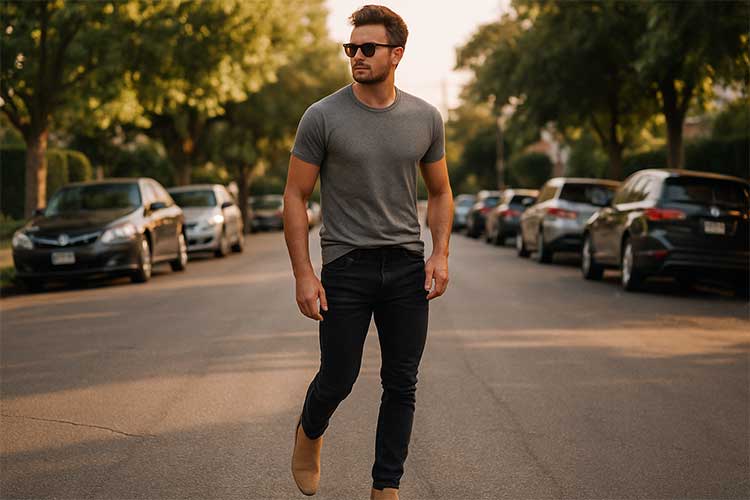
Skinny jeans have been a mainstay in men’s fashion for over a decade, but that doesn’t mean everyone understands what sets them apart from their close cousin: slim jeans. As styles continue to evolve, more men are left scratching their heads, wondering which fit actually suits them best. Should you go for the snug, body-hugging skinny? Or stick with the more forgiving slim cut?
Both styles dominate modern wardrobes, yet choosing the wrong fit can disrupt your entire look and compromise your comfort. Whether you’re shopping for a night out, daily wear, or something in between, understanding the difference between the two can save you time and frustration. In this guide, you’ll get a clear, practical breakdown of skinny jeans, how they differ from slim fits, and which ones actually flatter your build. Style tips and buying advice included.
The Key Difference Between Slim and Skinny Jeans
Ask most guys the difference between slim and skinny jeans, and you’ll likely get a vague shrug. But here’s the real deal: while they may seem similar on the rack, they fit very differently once you pull them on. Understanding that distinction is the key to finding jeans that look good and feel right.
Slim jeans are cut to follow the natural line of your legs without clinging too tightly. They taper from the hips down to the ankle, offering a tailored silhouette that’s snug but not restrictive. Think of them as the modern man’s upgrade to the classic straight leg, clean, sharp, and versatile. The leg opening is narrow, but it leaves room to breathe and move comfortably throughout the day.
Skinny jeans, on the other hand, take that taper to the next level. They hug your thighs, knees, calves, and even your ankles. The fit is designed to sit close to the waist and hem, creating a more fitted silhouette. Many styles incorporate a percentage of elastane or spandex, providing the jeans with enough stretch to move with your body without losing their shape.
So why does this matter? Fit defines the vibe. Slim jeans are a lean, casual-cool choice, often worn in business-casual settings or paired with boots for a dressed-up look. Skinny jeans bring a more style-forward edge ideal for statement outfits, streetwear looks, or nights out where you’re going for impact. The difference between slim and skinny jeans isn’t just in the fabric; it’s in how you want to be seen.
Fit Breakdown: How Each Style Feels and Moves
When choosing jeans, how they feel while walking, sitting, or moving through your day can be just as important as their appearance. That’s where a proper skinny jeans fit guide for men comes in handy. Fit isn’t just about size, it’s about comfort, flexibility, and confidence in how your clothes perform.
Slim-fit jeans offer a balanced shape. They’re gently tapered from the thigh to the ankle, allowing for movement without feeling constricting or baggy. You won’t feel compressed when crouching or sitting, which makes slim fits a reliable choice for everyday wear, especially if you’re on your feet or moving around a lot. They’re ideal for men who want structure without stiffness.
Skinny fit jeans take things closer to the skin. They contour to your legs and stay snug from the hip down. To avoid that stiff, restrictive feeling, most skinny jeans for men are made from denim blended with stretch fibers like elastane. This bit of stretch is the difference between feeling locked in and comfortably secure. Skinny jeans work best on leaner frames or if you’re aiming for a streamlined, modern silhouette that doesn’t sag or bunch.
Now, let’s talk fabric. Whether slim or skinny, denim with 1–2% elastane gives the best of both worlds: structure with stretch. This detail helps jeans keep their shape, hug in the right spots, and recover after every wash or wear.
Which Jean Fits Your Body Type Best
Here’s where most guys get it wrong, choosing jeans based on trend, not fit. The truth is, no matter how good skinny jeans look on a mannequin, they won’t work if they don’t match your frame. Knowing how each cut affects proportions helps you make smarter choices. So, when it comes to slim vs. skinny jeans and body type, here’s what actually works.
If you’ve got an athletic build, strong thighs, muscular calves, and a V-shaped torso, go with slim-fit jeans. They skim your build without choking it. Skinny jeans on bulkier legs often pull awkwardly at the thighs or knees, causing tension in the fabric and an unflattering look. A slim taper will accentuate your shape without making you look like you’re squeezed into the wrong size.
Lean guys, this is where skinny jeans shine. They add definition to slender legs and give a more structured appearance without excess fabric. With the right stretch blend, you’ll avoid the “painted-on” look while still benefiting from the close, streamlined shape. Skinny jeans help give proportion to slim upper bodies by balancing out the silhouette.
Now, if you have a regular or larger build, whether that means broader hips, thicker thighs, or more weight in the midsection, straight or slim-straight cuts usually deliver the best results. Skinny fits tend to exaggerate size and create an off-balance look, especially around the waist and ankle. Slim jeans, however, offer a tidy, flattering shape that doesn’t draw attention to their width or volume.
The bottom line? Your fit should flatter, not fight against your body. The slim vs skinny jeans body type debate isn’t about fashion rules; it’s about finding what feels and looks natural on you.
Are Skinny Jeans Still in Style for Men?
Some guys swear they’re dead. Others never took them off. So what’s the truth? Are skinny jeans still in style for men, or have baggy, oversized fits replaced them? Here’s the interesting part: while trends swing, skinny jeans never fully left. They’ve just evolved.
Skinny jeans first gained popularity through music culture, particularly among punk rockers, skaters, and indie bands. Over time, they evolved and became incorporated into mainstream wardrobes. Today, instead of ultra-tight low-rise versions, designers are favoring stretch skinnies with more structure, subtle distressing, and cropped hems. This modern spin keeps them looking fresh without screaming early-2010s.
Even with the current wave of looser silhouettes, such as relaxed or wide-leg fits, skinny jeans still hold their ground. Men who prefer sharp, tailored outfits keep them in rotation because they pair easily with jackets, boots, or streetwear staples. And while loose pants dominate some runways, slimmer fits remain a core part of retail collections across price points.
The rise of modern vs classic fit jeans also tells the story. Classic fits lean, straight, and simple, while modern styles such as stretch skinny or tapered skinny jeans offer a closer cut without sacrificing comfort. It’s this blend of style and wearability that’s kept them relevant.
So if you like how they look and feel, keep wearing them. Fashion trends shift, but personal style always prevails.
How to Style Slim and Skinny Jeans the Right Way
Styling skinny jeans isn’t just about squeezing into the tightest pair and calling it a day. The way you pair them with shirts, layers, and shoes can either enhance your look or completely throw it off. If you’ve ever wondered how to wear skinny jeans without looking out of place, here’s how to do it right.
Start with smart-casual combos. A well-fitted Oxford shirt or fine-gauge sweater pairs perfectly with dark, skinny, or slim jeans. Tuck the shirt in and add a leather belt for a polished look. Want to elevate things further? Chelsea boots or minimalist sneakers are a foolproof match. If you’re asking what shoes to wear with skinny jeans, clean lines and low profiles are key. Skip anything bulky that overpowers the ankle.
For off-duty days, go relaxed but intentional. A graphic tee or hoodie gives you that laid-back edge, especially when layered under a denim jacket or bomber. Slim jeans in medium or light washes balance out the casual vibe. To complete the look, opt for sneakers, such as Vans, Converse, or leather trainers.
Layering is where skinny and slim fits really shine. Because the jeans are fitted, they accentuate your silhouette and allow upper layers to play with volume. An overshirt, cardigan, or structured blazer adds shape without clashing. It’s also a smart way to transition skinny jeans between seasons, light layers in spring, wool or suede in colder months.
Men’s fashion skinny jeans outfits work best when the rest of your look feels deliberate. Avoid oversized tops that make your legs look disproportionately thin. Stick with balanced fits, neat layers, and shoes that complement the clean line of your jeans.
Buying Guide: What to Look for Before Choosing
Before pulling the trigger on a new pair, you’ll want to check a few key details that separate a regret purchase from your go-to jeans. Whether you’re looking for stretch skinny jeans for men or something designed for all-day comfort, these checkpoints will save you time and frustration.
Start with fabric. The best comfortable skinny jeans for men include 1–2% elastane or spandex. This stretch factor lets the jeans move with you, not against you. Without it, skinny fits can feel rigid and tight after a few hours. With it, you get flexibility and shape retention—a must for a slim, clean look that lasts.
Next, pay attention to the rise and waist fit. Low-rise jeans can sag or dig in, while high-rise options can sit awkwardly if not paired well. Most guys find that a mid-rise strikes the best balance, keeping everything in place without cutting into your core. The waistband should hug, not pinch. If you’re stuck between sizes, try the larger one with a belt.
Now for the length. Aim for a hem that falls just at the ankle. That clean break keeps the silhouette sharp, especially with tapered styles. Too much stacking can ruin the line of even the best skinny jeans for men, making them appear sloppy instead of sleek.
Lastly, double-check the brand’s fit guide. Not all “skinny” or “slim” labels mean the same thing. Some run extra tight; others lean closer to a slim-straight fit. Reviews help here; real fit feedback can tell you more than a size chart ever will.
Slim or Skinny? Which Should You Choose?
There’s no shortage of opinions on skinny jeans, but here’s the thing most style advice skips: they’re not better or worse than slim fits. They’re just different tools for different jobs. So if you’re stuck asking how to choose between slim and skinny jeans, it’s time to get real about what works for your style and your life.
If your go-to look is sharp, trend-aware, or you’re working with a leaner frame, skinny jeans can feel like a second skin in a good way. They’re built for confident, fashion-forward outfits that thrive on structure and edge.
Slim jeans, on the other hand, win in comfort and flexibility. They provide you with room to move without sacrificing a tailored fit. If you’re after versatility, something you can wear to brunch, work, or date night—slim fit is the steady choice.
Truth is, both cuts deserve space in your rotation. Think of it like footwear, you wouldn’t wear the same shoes everywhere, right? So whether you lean toward skinny jeans for punch or slim fits for ease, base your choice on how you want to feel, how you move, and what fits your frame best.